How to Check Seller Ownership Before Buying Property
Learn how to verify that a property seller is entitled to sell, including joint ownership, inheritance, POA and independent record checks.
Jameendar Editorial · · 4 min read
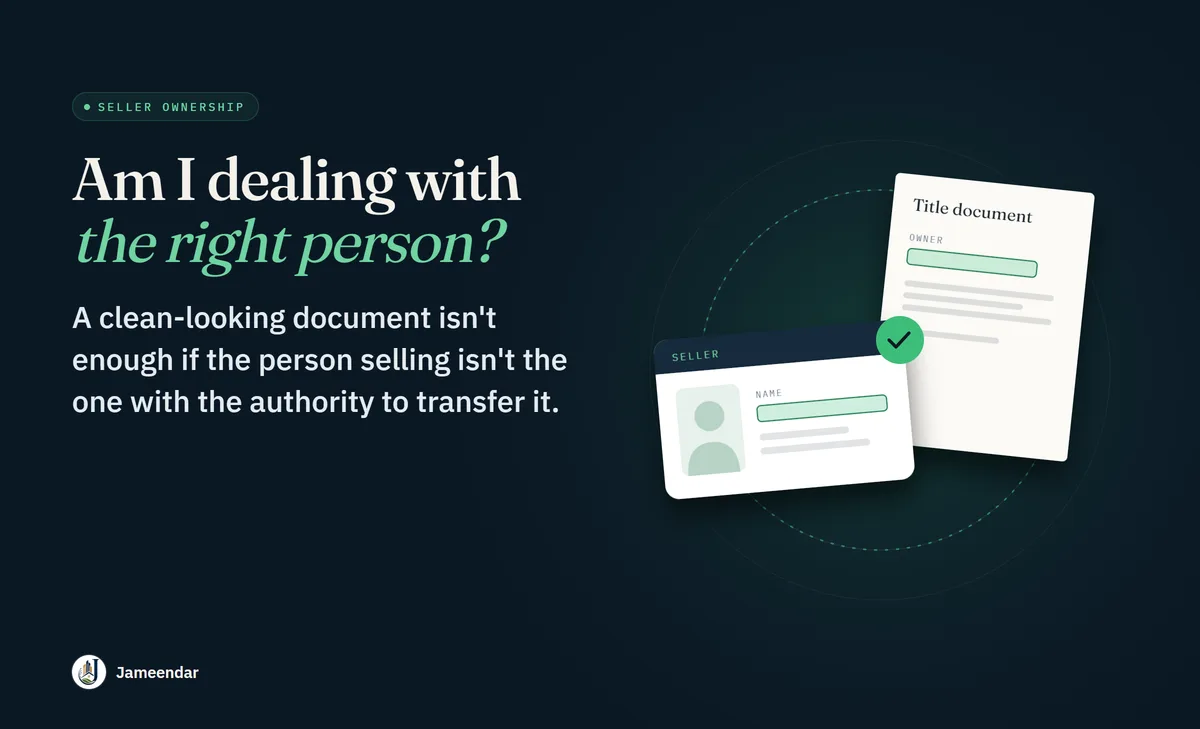
One of the simplest questions when buying property in Telangana is also one of the most important: Is the person selling this property actually entitled to sell it?
Buyers often focus on the property documents and forget to verify the person behind the transaction. A clean-looking document is not enough if the person negotiating the sale is not the sole person with the legal authority to transfer the property.
Start with the name match
Compare the seller's name with the current title document.
Then compare identity documents and look for unexplained differences in spelling, initials, name order or other details.
A mismatch does not automatically mean the seller is not the owner. But it should have a documentary explanation.
Identify all owners
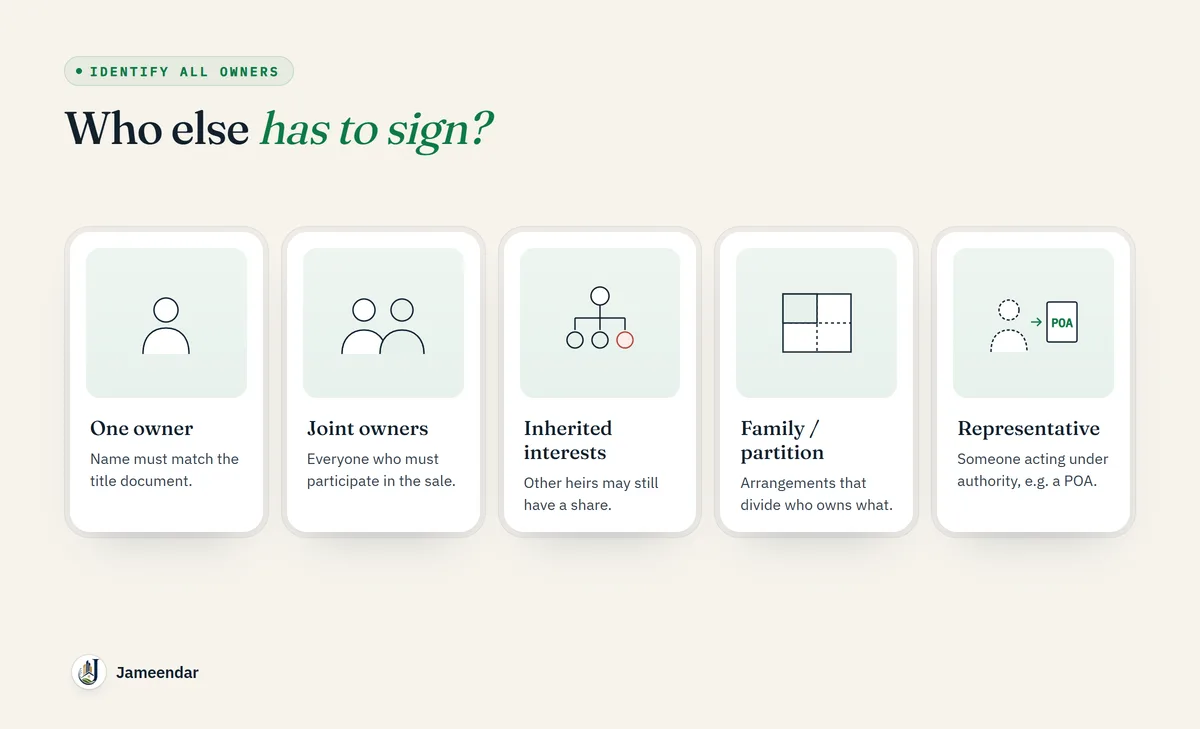
A property may have:
- one owner;
- multiple joint owners;
- inherited interests;
- family/partition arrangements; or
- a person acting through an authorized representative.
If multiple people have ownership interests, understand who must participate in the transaction.
Do not let “I am handling everything” replace document verification.
Inherited property requires extra care
When a seller inherited the property, ask how the inheritance was established and whether the ownership record was updated.
Depending on the facts, relevant documents can include a will, succession documents, probate/court records, partition/release documents or other evidence.
The purpose is to identify whether other people may have an interest that has not been accounted for.
Power of Attorney sales need special scrutiny
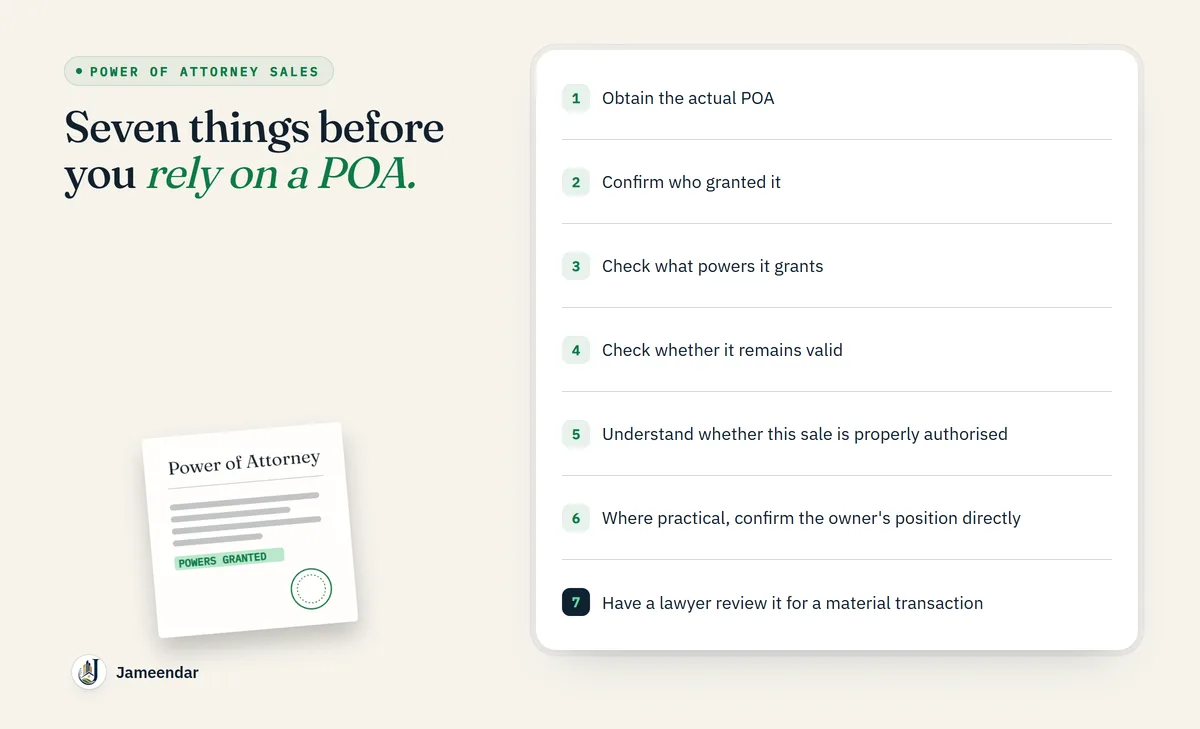
A POA allows one person to act on behalf of another within the authority granted by the document.
Before relying on a POA:
- Obtain the actual POA.
- Confirm who granted it.
- Check what powers it grants.
- Check whether it remains valid.
- Understand whether the sale itself is properly authorized.
- Where practical, confirm the owner's position directly.
- Have a lawyer review the document for a material transaction.
Never assume that the phrase “general power” automatically answers every question about a particular sale.
Cross-check independent records
Use the seller's documents as the starting point, not the finish line.
Where relevant, compare ownership information against property-tax records, registration history and Bhu Bharati/revenue records.
If the seller's name appears differently across records, investigate why.
Ask the seller five direct questions
- How did you acquire the property?
- Are there any co-owners?
- Did you inherit it?
- Is anyone acting under a POA?
- Is there any ongoing dispute, loan or claim involving the property?
The answers should be consistent with the paperwork.
Red flags
Slow down when:
- the seller refuses to show originals;
- another person claims to be the owner;
- a POA cannot be produced;
- heirs are mentioned but not documented;
- names differ without explanation;
- the seller asks you to pay before answering ownership questions; or
- the broker discourages direct communication with the owner.
None of these proves fraud by itself. They are signals that require more evidence.
Ownership verification vs title verification
These are related but different.
Seller ownership check: Who is the person selling, and what authority do they have?
Title verification: Does the property's ownership history form a legally coherent chain?
You need both.
Practical checklist
| Question | Evidence to request |
|---|---|
| Who owns it? | Current title document |
| Who is the seller? | Identity proof |
| Are there co-owners? | Title/ownership records |
| Was it inherited? | Succession/inheritance documents |
| Is there a POA? | Actual POA + legal review |
| Does the record match? | Tax/registration/revenue cross-check |
| Is there a dispute? | Seller disclosure + legal search where appropriate |
FAQs
What should I check first?
Match the seller's identity to the ownership document and identify all possible owners.
Can one heir sell inherited property alone?
Do not assume so. The answer depends on the inheritance and ownership circumstances. Have the specific documents reviewed.
Is a POA sale automatically unsafe?
No. But it requires careful verification of the authority and validity of the POA and the transaction.
Can ownership be verified online?
Some records can be cross-checked online, but identity documents, POA validity and complex ownership issues often require document and professional review.
Final takeaway
Before asking “Is this a good property?”, ask “Am I dealing with the right person?”
Verify the seller, identify all interested owners, cross-check independent records and obtain legal review when the ownership structure is complicated.